The White House has told Sir Keir Starmer not to ban social media for under-16s.
The Trump administration criticised plans for Australian-style age restrictions, arguing that they could harm freedom of speech and that parents should be mainly responsible for regulating their children’s social media use.
It threatens to open a fresh rift between Downing Street and the US following a week of tension over the death of the 18-year-old British student Henry Nowak.
Last week JD Vance, the US vice-president, blamed the death of Nowak on the “mass invasion of migrants”. Downing Street accused him of “trying to interfere in our democracy and seeking to stir up division”.
On Monday a minister also criticised Pete Hegseth, the US defence secretary, for using a D-Day anniversary ceremony to attack Europe over illegal migrant crossings.
The Trump administration criticised plans for Australian-style age restrictions, arguing that they could harm freedom of speech and that parents should be mainly responsible for regulating their children’s social media use.
It threatens to open a fresh rift between Downing Street and the US following a week of tension over the death of the 18-year-old British student Henry Nowak.
Last week JD Vance, the US vice-president, blamed the death of Nowak on the “mass invasion of migrants”. Downing Street accused him of “trying to interfere in our democracy and seeking to stir up division”.
On Monday a minister also criticised Pete Hegseth, the US defence secretary, for using a D-Day anniversary ceremony to attack Europe over illegal migrant crossings.
In a submission to the Government’s consultation on a social media ban for children, the US warned against “prescribed one-size-fits-all government restrictions” and “blunt regulatory instruments” to tackle online harms.
A notice, published by the US embassy in London, said the White House favoured “targeted requirements”on “pornographic and adult commercial content ... rather than broad social media bans”.
The US administration also raised concerns about age restrictions that would “impose disproportionate compliance burdens on American companies”.
Sir Keir is expected to announce a social media ban for children in a speech next week, after calls from campaigners to restrict access to harmful content for minors.
There is growing speculation that he will opt for a so-called “Australia-plus” model with a ban on a wider range of sites combined with restrictions on “addictive” features and tougher age checks to prevent children circumventing the rules.
The Trump administration criticised plans for Australian-style age restrictions, arguing that they could harm freedom of speech and that parents should be mainly responsible for regulating their children’s social media use.
It threatens to open a fresh rift between Downing Street and the US following a week of tension over the death of the 18-year-old British student Henry Nowak.
Last week JD Vance, the US vice-president, blamed the death of Nowak on the “mass invasion of migrants”. Downing Street accused him of “trying to interfere in our democracy and seeking to stir up division”.
On Monday a minister also criticised Pete Hegseth, the US defence secretary, for using a D-Day anniversary ceremony to attack Europe over illegal migrant crossings.
In a submission to the Government’s consultation on a social media ban for children, the US warned against “prescribed one-size-fits-all government restrictions” and “blunt regulatory instruments” to tackle online harms.
A notice, published by the US embassy in London, said the White House favoured “targeted requirements”on “pornographic and adult commercial content ... rather than broad social media bans”.
The US administration also raised concerns about age restrictions that would “impose disproportionate compliance burdens on American companies”.
Sir Keir is expected to announce a social media ban for children in a speech next week, after calls from campaigners to restrict access to harmful content for minors.
There is growing speculation that he will opt for a so-called “Australia-plus” model with a ban on a wider range of sites combined with restrictions on “addictive” features and tougher age checks to prevent children circumventing the rules.
Sir Keir is said to be carving out policies to provide him with a “legacy” as he faces the threat of a leadership challenge from Andy Burnham, the Greater Manchester Mayor who is favourite to secure a return to Parliament in the Makerfield by-election on June 18.
But free speech campaigners say the policy would require all users to submit to ID checks to use social media platforms, which would compromise the anonymity of users.
Sarah Rogers, Donald Trump’s free speech tsar, has previously accused the UK Government of being “hostile to freedom of speech” and compared Britain to Russia and Iran after Sir Keir’s threat to ban X if it did not restrict the creation of “deepfake” AI-generated pornographic images.
However, the latest intervention is the first time the US has submitted a formal objection to Sir Keir’s plans. It was made in a 1,200-word response to his consultation on “growing up in the online world”, which closed on Friday.
The Telegraph understands the submission was made the previous week, in late May, amid speculation that ministers were preparing to announce a ban as soon as the request for views from the public closed.
Foreign governments rarely submit their opinions on Britain’s domestic policy via public consultations, preferring to talk privately about them via diplomatic channels.
In its response, the US warned: “The best answer to challenges posed by technology is almost always better technology, not broad bans or blunt regulatory instruments.
“Most content should remain accessible by default, including political speech. We believe an open internet is essential to the preservation of free speech and most content should be accessible by default unless the provider knows or has reason to know the user is a child.
“We have concerns about regulations that impose disproportionate compliance burdens on American companies or that apply to one platform but not similar services.”
The Trump administration criticised plans for Australian-style age restrictions, arguing that they could harm freedom of speech and that parents should be mainly responsible for regulating their children’s social media use.
It threatens to open a fresh rift between Downing Street and the US following a week of tension over the death of the 18-year-old British student Henry Nowak.
Last week JD Vance, the US vice-president, blamed the death of Nowak on the “mass invasion of migrants”. Downing Street accused him of “trying to interfere in our democracy and seeking to stir up division”.
On Monday a minister also criticised Pete Hegseth, the US defence secretary, for using a D-Day anniversary ceremony to attack Europe over illegal migrant crossings.
In a submission to the Government’s consultation on a social media ban for children, the US warned against “prescribed one-size-fits-all government restrictions” and “blunt regulatory instruments” to tackle online harms.
A notice, published by the US embassy in London, said the White House favoured “targeted requirements”on “pornographic and adult commercial content ... rather than broad social media bans”.
The US administration also raised concerns about age restrictions that would “impose disproportionate compliance burdens on American companies”.
Sir Keir is expected to announce a social media ban for children in a speech next week, after calls from campaigners to restrict access to harmful content for minors.
There is growing speculation that he will opt for a so-called “Australia-plus” model with a ban on a wider range of sites combined with restrictions on “addictive” features and tougher age checks to prevent children circumventing the rules.
Sir Keir is said to be carving out policies to provide him with a “legacy” as he faces the threat of a leadership challenge from Andy Burnham, the Greater Manchester Mayor who is favourite to secure a return to Parliament in the Makerfield by-election on June 18.
But free speech campaigners say the policy would require all users to submit to ID checks to use social media platforms, which would compromise the anonymity of users.
Sarah Rogers, Donald Trump’s free speech tsar, has previously accused the UK Government of being “hostile to freedom of speech” and compared Britain to Russia and Iran after Sir Keir’s threat to ban X if it did not restrict the creation of “deepfake” AI-generated pornographic images.
However, the latest intervention is the first time the US has submitted a formal objection to Sir Keir’s plans. It was made in a 1,200-word response to his consultation on “growing up in the online world”, which closed on Friday.
The Telegraph understands the submission was made the previous week, in late May, amid speculation that ministers were preparing to announce a ban as soon as the request for views from the public closed.
Foreign governments rarely submit their opinions on Britain’s domestic policy via public consultations, preferring to talk privately about them via diplomatic channels.
In its response, the US warned: “The best answer to challenges posed by technology is almost always better technology, not broad bans or blunt regulatory instruments.
“Most content should remain accessible by default, including political speech. We believe an open internet is essential to the preservation of free speech and most content should be accessible by default unless the provider knows or has reason to know the user is a child.
“We have concerns about regulations that impose disproportionate compliance burdens on American companies or that apply to one platform but not similar services.”
It also warned against proposals to restrict children’s access to virtual private network software, which allows a user to avoid restrictions by accessing a site as if they were abroad.
“Policies banning or treating such internet freedom and privacy tools as inherently suspect are typically associated with states that subject their people to significant censorship and human rights violations,” it said.
On Monday, Sir Keir set out plans for platforms to block children from viewing or producing nude images. Tech giants such as Apple and Google will be given three months to introduce technology that will prevent children under 18 from using their phones and cameras to view naked images.
If the firms fail to comply by the deadline, ministers will introduce legislation to force them to do so with fines, restrictions on phone sales to children and criminal sanctions against bosses potentially including jail sentences.
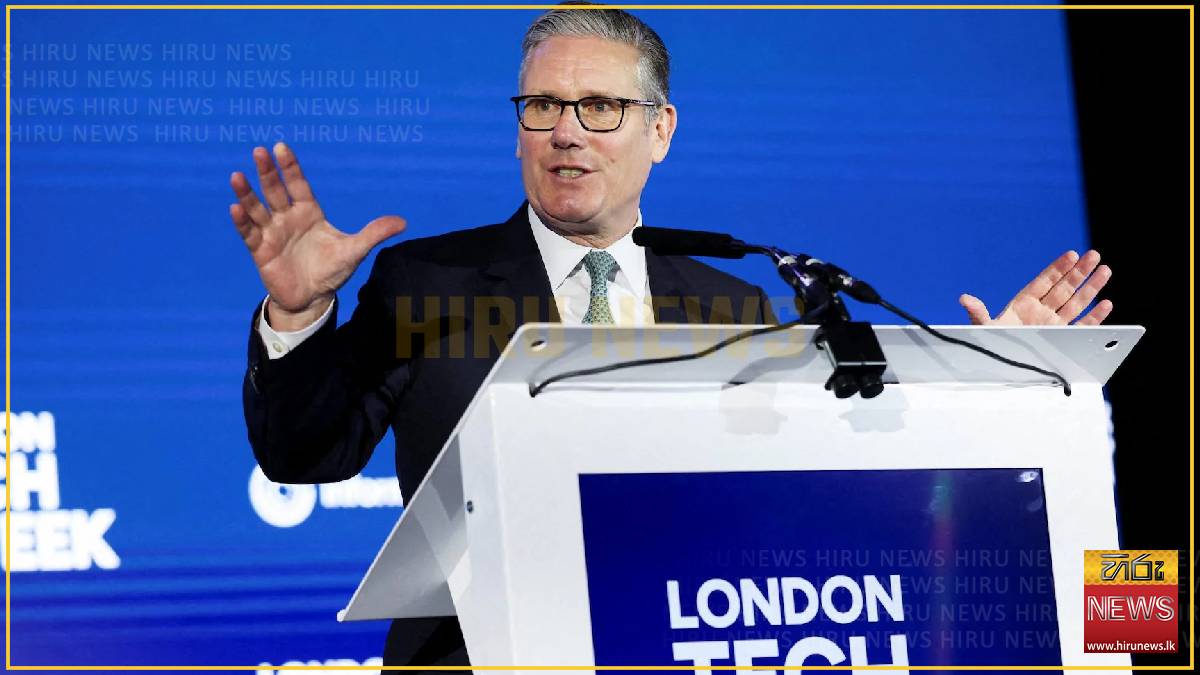
Announcing the measures in a speech at London Tech Week, Sir Keir said: “For too long people have been told that is simply the price of modern tech, that nothing can be done, that government is powerless, that parents just have to accept it. But I reject that completely.
“Because tech should adapt to the needs of society – not the other way round. And so if we’re serious about unlocking the opportunities that tech can bring, then we must also be serious about protecting our children from those who look to abuse it.”
The measures, said to be the first of their kind in the world, will mean that children will be unable to view any nudity on their phones, including pornography and sex scenes in films.
It will also prevent them taking and sharing nude photos, which police have blamed for fuelling a surge in online child sexual exploitation, where children are blackmailed by predators after they are coerced into sending naked images.
About 91 per cent of online child sex abuse is self-generated by children groomed, tricked and exploited by predators, according to the Home Office.
Adults will still be able to take, share or view nude content on their smart devices by using age verification processes to show they are over 18.
Shabana Mahmood, the Home Secretary, said: “As a society, we have not kept pace with the changing threats that children face. Abuse online is far too common, and we will not tolerate it.
“Tech companies have a moral duty to act by making it impossible for children to take, share or view nude images. If they don’t, we will legislate.”
However, Dame Rachel de Souza, the children’s commissioner, has proposed that any social media ban should be extended to 16 and 17-year-olds, applying “equally to all children” up to 18.
She also urged Sir Keir to draw up a list of features tech firms would be forced to ban, because they encourage children to stay online, put them at risk of seeing harmful content or enable them to be contacted by strangers.
The nudity ban announced on Monday had been demanded by Jess Phillips, the former safeguarding minister, who quit because of Sir Keir’s delays in committing to forcing companies to introduce the technology.
Experts believe companies could easily introduce the technology to block nude images. Apple is already rolling out age checks for iPhone and iPad users in Britain which ask them to verify whether they are adults to access “certain services” such as 18-plus apps.
Users who do not confirm how old they are or are underage have web content filters turned on automatically. Last year, Google introduced measures to detect and blur nude images and issue warnings when a child attempts to open, send or forward them.
The Government expects the companies to consolidate and expand these features.
Some civil liberties groups have expressed concerns that the software tech companies are being forced to introduce threatens anonymity and privacy.
-The Telegraph
The Trump administration criticised plans for Australian-style age restrictions, arguing that they could harm freedom of speech and that parents should be mainly responsible for regulating their children’s social media use.
It threatens to open a fresh rift between Downing Street and the US following a week of tension over the death of the 18-year-old British student Henry Nowak.
Last week JD Vance, the US vice-president, blamed the death of Nowak on the “mass invasion of migrants”. Downing Street accused him of “trying to interfere in our democracy and seeking to stir up division”.
On Monday a minister also criticised Pete Hegseth, the US defence secretary, for using a D-Day anniversary ceremony to attack Europe over illegal migrant crossings.
The Trump administration criticised plans for Australian-style age restrictions, arguing that they could harm freedom of speech and that parents should be mainly responsible for regulating their children’s social media use.
It threatens to open a fresh rift between Downing Street and the US following a week of tension over the death of the 18-year-old British student Henry Nowak.
Last week JD Vance, the US vice-president, blamed the death of Nowak on the “mass invasion of migrants”. Downing Street accused him of “trying to interfere in our democracy and seeking to stir up division”.
On Monday a minister also criticised Pete Hegseth, the US defence secretary, for using a D-Day anniversary ceremony to attack Europe over illegal migrant crossings.
In a submission to the Government’s consultation on a social media ban for children, the US warned against “prescribed one-size-fits-all government restrictions” and “blunt regulatory instruments” to tackle online harms.
A notice, published by the US embassy in London, said the White House favoured “targeted requirements”on “pornographic and adult commercial content ... rather than broad social media bans”.
The US administration also raised concerns about age restrictions that would “impose disproportionate compliance burdens on American companies”.
Sir Keir is expected to announce a social media ban for children in a speech next week, after calls from campaigners to restrict access to harmful content for minors.
There is growing speculation that he will opt for a so-called “Australia-plus” model with a ban on a wider range of sites combined with restrictions on “addictive” features and tougher age checks to prevent children circumventing the rules.
The Trump administration criticised plans for Australian-style age restrictions, arguing that they could harm freedom of speech and that parents should be mainly responsible for regulating their children’s social media use.
It threatens to open a fresh rift between Downing Street and the US following a week of tension over the death of the 18-year-old British student Henry Nowak.
Last week JD Vance, the US vice-president, blamed the death of Nowak on the “mass invasion of migrants”. Downing Street accused him of “trying to interfere in our democracy and seeking to stir up division”.
On Monday a minister also criticised Pete Hegseth, the US defence secretary, for using a D-Day anniversary ceremony to attack Europe over illegal migrant crossings.
In a submission to the Government’s consultation on a social media ban for children, the US warned against “prescribed one-size-fits-all government restrictions” and “blunt regulatory instruments” to tackle online harms.
A notice, published by the US embassy in London, said the White House favoured “targeted requirements”on “pornographic and adult commercial content ... rather than broad social media bans”.
The US administration also raised concerns about age restrictions that would “impose disproportionate compliance burdens on American companies”.
Sir Keir is expected to announce a social media ban for children in a speech next week, after calls from campaigners to restrict access to harmful content for minors.
There is growing speculation that he will opt for a so-called “Australia-plus” model with a ban on a wider range of sites combined with restrictions on “addictive” features and tougher age checks to prevent children circumventing the rules.
Sir Keir is said to be carving out policies to provide him with a “legacy” as he faces the threat of a leadership challenge from Andy Burnham, the Greater Manchester Mayor who is favourite to secure a return to Parliament in the Makerfield by-election on June 18.
But free speech campaigners say the policy would require all users to submit to ID checks to use social media platforms, which would compromise the anonymity of users.
Sarah Rogers, Donald Trump’s free speech tsar, has previously accused the UK Government of being “hostile to freedom of speech” and compared Britain to Russia and Iran after Sir Keir’s threat to ban X if it did not restrict the creation of “deepfake” AI-generated pornographic images.
However, the latest intervention is the first time the US has submitted a formal objection to Sir Keir’s plans. It was made in a 1,200-word response to his consultation on “growing up in the online world”, which closed on Friday.
The Telegraph understands the submission was made the previous week, in late May, amid speculation that ministers were preparing to announce a ban as soon as the request for views from the public closed.
Foreign governments rarely submit their opinions on Britain’s domestic policy via public consultations, preferring to talk privately about them via diplomatic channels.
In its response, the US warned: “The best answer to challenges posed by technology is almost always better technology, not broad bans or blunt regulatory instruments.
“Most content should remain accessible by default, including political speech. We believe an open internet is essential to the preservation of free speech and most content should be accessible by default unless the provider knows or has reason to know the user is a child.
“We have concerns about regulations that impose disproportionate compliance burdens on American companies or that apply to one platform but not similar services.”
The Trump administration criticised plans for Australian-style age restrictions, arguing that they could harm freedom of speech and that parents should be mainly responsible for regulating their children’s social media use.
It threatens to open a fresh rift between Downing Street and the US following a week of tension over the death of the 18-year-old British student Henry Nowak.
Last week JD Vance, the US vice-president, blamed the death of Nowak on the “mass invasion of migrants”. Downing Street accused him of “trying to interfere in our democracy and seeking to stir up division”.
On Monday a minister also criticised Pete Hegseth, the US defence secretary, for using a D-Day anniversary ceremony to attack Europe over illegal migrant crossings.
In a submission to the Government’s consultation on a social media ban for children, the US warned against “prescribed one-size-fits-all government restrictions” and “blunt regulatory instruments” to tackle online harms.
A notice, published by the US embassy in London, said the White House favoured “targeted requirements”on “pornographic and adult commercial content ... rather than broad social media bans”.
The US administration also raised concerns about age restrictions that would “impose disproportionate compliance burdens on American companies”.
Sir Keir is expected to announce a social media ban for children in a speech next week, after calls from campaigners to restrict access to harmful content for minors.
There is growing speculation that he will opt for a so-called “Australia-plus” model with a ban on a wider range of sites combined with restrictions on “addictive” features and tougher age checks to prevent children circumventing the rules.
Sir Keir is said to be carving out policies to provide him with a “legacy” as he faces the threat of a leadership challenge from Andy Burnham, the Greater Manchester Mayor who is favourite to secure a return to Parliament in the Makerfield by-election on June 18.
But free speech campaigners say the policy would require all users to submit to ID checks to use social media platforms, which would compromise the anonymity of users.
Sarah Rogers, Donald Trump’s free speech tsar, has previously accused the UK Government of being “hostile to freedom of speech” and compared Britain to Russia and Iran after Sir Keir’s threat to ban X if it did not restrict the creation of “deepfake” AI-generated pornographic images.
However, the latest intervention is the first time the US has submitted a formal objection to Sir Keir’s plans. It was made in a 1,200-word response to his consultation on “growing up in the online world”, which closed on Friday.
The Telegraph understands the submission was made the previous week, in late May, amid speculation that ministers were preparing to announce a ban as soon as the request for views from the public closed.
Foreign governments rarely submit their opinions on Britain’s domestic policy via public consultations, preferring to talk privately about them via diplomatic channels.
In its response, the US warned: “The best answer to challenges posed by technology is almost always better technology, not broad bans or blunt regulatory instruments.
“Most content should remain accessible by default, including political speech. We believe an open internet is essential to the preservation of free speech and most content should be accessible by default unless the provider knows or has reason to know the user is a child.
“We have concerns about regulations that impose disproportionate compliance burdens on American companies or that apply to one platform but not similar services.”
It also warned against proposals to restrict children’s access to virtual private network software, which allows a user to avoid restrictions by accessing a site as if they were abroad.
“Policies banning or treating such internet freedom and privacy tools as inherently suspect are typically associated with states that subject their people to significant censorship and human rights violations,” it said.
On Monday, Sir Keir set out plans for platforms to block children from viewing or producing nude images. Tech giants such as Apple and Google will be given three months to introduce technology that will prevent children under 18 from using their phones and cameras to view naked images.
If the firms fail to comply by the deadline, ministers will introduce legislation to force them to do so with fines, restrictions on phone sales to children and criminal sanctions against bosses potentially including jail sentences.
Announcing the measures in a speech at London Tech Week, Sir Keir said: “For too long people have been told that is simply the price of modern tech, that nothing can be done, that government is powerless, that parents just have to accept it. But I reject that completely.
“Because tech should adapt to the needs of society – not the other way round. And so if we’re serious about unlocking the opportunities that tech can bring, then we must also be serious about protecting our children from those who look to abuse it.”
The measures, said to be the first of their kind in the world, will mean that children will be unable to view any nudity on their phones, including pornography and sex scenes in films.
It will also prevent them taking and sharing nude photos, which police have blamed for fuelling a surge in online child sexual exploitation, where children are blackmailed by predators after they are coerced into sending naked images.
About 91 per cent of online child sex abuse is self-generated by children groomed, tricked and exploited by predators, according to the Home Office.
Adults will still be able to take, share or view nude content on their smart devices by using age verification processes to show they are over 18.
Shabana Mahmood, the Home Secretary, said: “As a society, we have not kept pace with the changing threats that children face. Abuse online is far too common, and we will not tolerate it.
“Tech companies have a moral duty to act by making it impossible for children to take, share or view nude images. If they don’t, we will legislate.”
However, Dame Rachel de Souza, the children’s commissioner, has proposed that any social media ban should be extended to 16 and 17-year-olds, applying “equally to all children” up to 18.
She also urged Sir Keir to draw up a list of features tech firms would be forced to ban, because they encourage children to stay online, put them at risk of seeing harmful content or enable them to be contacted by strangers.
The nudity ban announced on Monday had been demanded by Jess Phillips, the former safeguarding minister, who quit because of Sir Keir’s delays in committing to forcing companies to introduce the technology.
Experts believe companies could easily introduce the technology to block nude images. Apple is already rolling out age checks for iPhone and iPad users in Britain which ask them to verify whether they are adults to access “certain services” such as 18-plus apps.
Users who do not confirm how old they are or are underage have web content filters turned on automatically. Last year, Google introduced measures to detect and blur nude images and issue warnings when a child attempts to open, send or forward them.
The Government expects the companies to consolidate and expand these features.
Some civil liberties groups have expressed concerns that the software tech companies are being forced to introduce threatens anonymity and privacy.
-The Telegraph