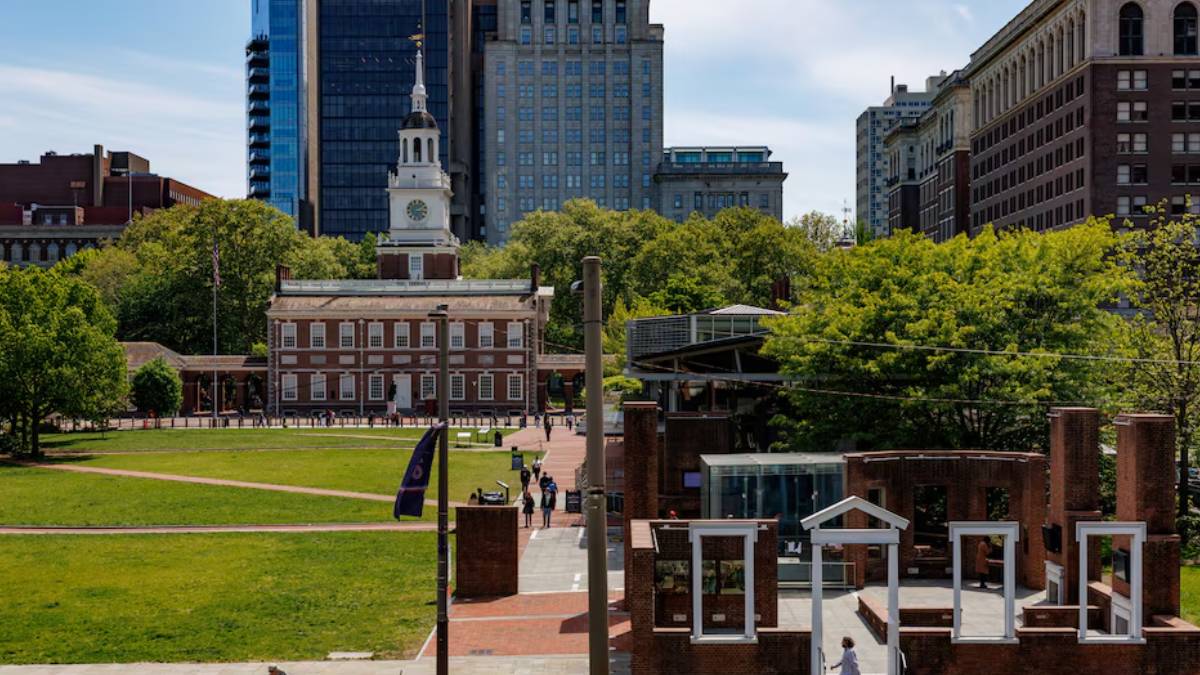
A few minutes' walk from Philadelphia's Independence Hall, where the nation's founding ideals were debated and declared, another part of the American story has become a flashpoint.
At the President's House, an early residence used by presidents George Washington and John Adams, an outdoor exhibit examines what the National Park Service describes as "the paradox between slavery and freedom." It centres on the lives of enslaved people, including Oney Judge, a woman enslaved by George and Martha Washington, who escaped in 1796 and remained free despite efforts to recapture her.
In January, the National Park Service removed slavery-related panels from the site after President Donald Trump issued an executive order last year directing federal agencies and cultural institutions to review and revise programmes it says promote "divisive ideology."
Administration officials say the changes restore balance to institutions they say focused too heavily on America's injustices while critics say they narrow discussion of slavery and race.
The Philadelphia move triggered a legal battle and a federal judge ordered the panels' restoration in February. Then, a federal appeals court ruled last month that the Trump administration could remove and replace the exhibit.
Alan Spears, senior director of cultural resources at the National Parks Conservation Association nonprofit, said the controversy's implications extend beyond Philadelphia, raising questions about whether historic sites can offer uncensored interpretations.
“When you take down those panels, you are sanitising, softening, whitewashing and erasing American history," Spears said.
As the United States marks its 250th anniversary, the debate over historical inclusion has become part of a larger national argument over how the country should tell its story: as a celebration of founding ideals and national achievement or a more nuanced reflection that includes slavery, Indigenous dispossession, immigration, exclusion and the struggles of marginalised groups to secure the rights promised in the nation's founding documents.
-Reuters
At the President's House, an early residence used by presidents George Washington and John Adams, an outdoor exhibit examines what the National Park Service describes as "the paradox between slavery and freedom." It centres on the lives of enslaved people, including Oney Judge, a woman enslaved by George and Martha Washington, who escaped in 1796 and remained free despite efforts to recapture her.
In January, the National Park Service removed slavery-related panels from the site after President Donald Trump issued an executive order last year directing federal agencies and cultural institutions to review and revise programmes it says promote "divisive ideology."
Administration officials say the changes restore balance to institutions they say focused too heavily on America's injustices while critics say they narrow discussion of slavery and race.
The Philadelphia move triggered a legal battle and a federal judge ordered the panels' restoration in February. Then, a federal appeals court ruled last month that the Trump administration could remove and replace the exhibit.
Alan Spears, senior director of cultural resources at the National Parks Conservation Association nonprofit, said the controversy's implications extend beyond Philadelphia, raising questions about whether historic sites can offer uncensored interpretations.
“When you take down those panels, you are sanitising, softening, whitewashing and erasing American history," Spears said.
As the United States marks its 250th anniversary, the debate over historical inclusion has become part of a larger national argument over how the country should tell its story: as a celebration of founding ideals and national achievement or a more nuanced reflection that includes slavery, Indigenous dispossession, immigration, exclusion and the struggles of marginalised groups to secure the rights promised in the nation's founding documents.
-Reuters