It’s not every day that a top company official asks to clean the restrooms at a commercial complex at night.
But Wang Chi, representative director and CEO of Iwith Robotics Co., did so and even attended to the work in person to study the workflow.
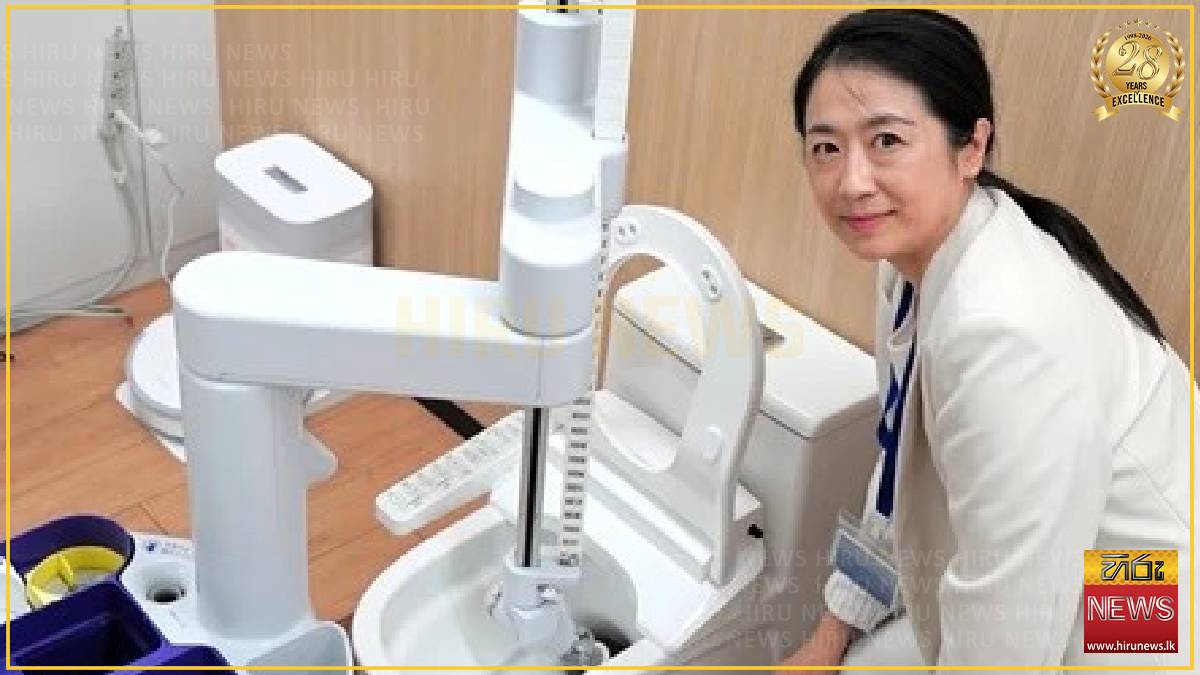
She also hired part-time workers to take measurements of toilets at 530 or so sites across Japan. The research data went into constructing a robot that takes about nine minutes to finish cleaning a single toilet bowl.
On a recent day in April, an arm attached to a main robot body, a size larger than a Western-style toilet bowl by its side, was seen going into motion.
The robot went on to replace brushes and wash them as it carefully cleaned the sides of the toilet bowl and the outside of the toilet seat.
“A high standard is expected, even in toilet cleaning, in Japan,” said Wang, 46, as she watched the robot at the company’s head office in Tokyo’s Shinagawa Ward. “We have proceeded with development work to meet that expectation.”
Wang said they designed the robot arm so it can move properly even inside a cramped compartment, she added.
The latest model, which is undergoing improvement work in Shenzhen, China, can do the same task in about half that time and is more compact in size, Wang said.
A survey taken last year by the infrastructure ministry showed that cleanliness led the list of qualities that the respondents said matter the most to them when they use a restroom outside their homes.
Cleanliness was cited by 75 percent of women and 67 percent of men, far ahead of the corresponding figures for a “lack of congestion,” the runner-up.
The Japan Building Maintenance Association’s survey of its member businesses showed the most common source of distress was difficulty in recruiting front-line workers, which was cited by 89 percent of the respondents.
-The Asahi Shimbun
But Wang Chi, representative director and CEO of Iwith Robotics Co., did so and even attended to the work in person to study the workflow.
She also hired part-time workers to take measurements of toilets at 530 or so sites across Japan. The research data went into constructing a robot that takes about nine minutes to finish cleaning a single toilet bowl.
On a recent day in April, an arm attached to a main robot body, a size larger than a Western-style toilet bowl by its side, was seen going into motion.
The robot went on to replace brushes and wash them as it carefully cleaned the sides of the toilet bowl and the outside of the toilet seat.
“A high standard is expected, even in toilet cleaning, in Japan,” said Wang, 46, as she watched the robot at the company’s head office in Tokyo’s Shinagawa Ward. “We have proceeded with development work to meet that expectation.”
Wang said they designed the robot arm so it can move properly even inside a cramped compartment, she added.
The latest model, which is undergoing improvement work in Shenzhen, China, can do the same task in about half that time and is more compact in size, Wang said.
A survey taken last year by the infrastructure ministry showed that cleanliness led the list of qualities that the respondents said matter the most to them when they use a restroom outside their homes.
Cleanliness was cited by 75 percent of women and 67 percent of men, far ahead of the corresponding figures for a “lack of congestion,” the runner-up.
The Japan Building Maintenance Association’s survey of its member businesses showed the most common source of distress was difficulty in recruiting front-line workers, which was cited by 89 percent of the respondents.
-The Asahi Shimbun