The election of the next United Nations Secretary-General is about far more than choosing the Organisation’s ninth leader.
It will test whether the international community still believes dialogue, cooperation and shared responsibility can prevail in an era marked by war, geopolitical rivalry, climate disruption and growing distrust.
The candidates bring impressive credentials, but the larger question is what kind of leadership an increasingly fragmented world now requires.
A historic choice
The contest to choose the next United Nations Secretary-General comes at one of the most consequential moments in the Organisation’s eighty-year history.
Rarely has a succession unfolded against such a demanding global backdrop.
War has returned to Europe, conflict continues to devastate parts of the Middle East and Africa, strategic rivalry between the United States and China is reshaping international politics, climate change is accelerating, and rapid technological change is creating opportunities and risks that transcend national borders.
At the same time, confidence in international institutions has weakened, even as the need for international cooperation has become more urgent.
Rarely has the choice of Secretary-General mattered more.
The office itself has changed remarkably little since the United Nations was established in 1945.
The Secretary-General commands no armed forces, controls no independent budget and possesses no authority to compel governments to act.
Yet expectations of the office have expanded dramatically. In times of international crisis, governments, civil society and public opinion increasingly look to the Secretary-General not for executive power but for political judgement, moral credibility and the ability to keep channels of dialogue open when diplomacy begins to falter.
The 2026 selection process will determine who succeeds António Guterres when his second term ends on 31 December 2026.
The successful candidate will assume office on 1 January 2027 for a five-year term.
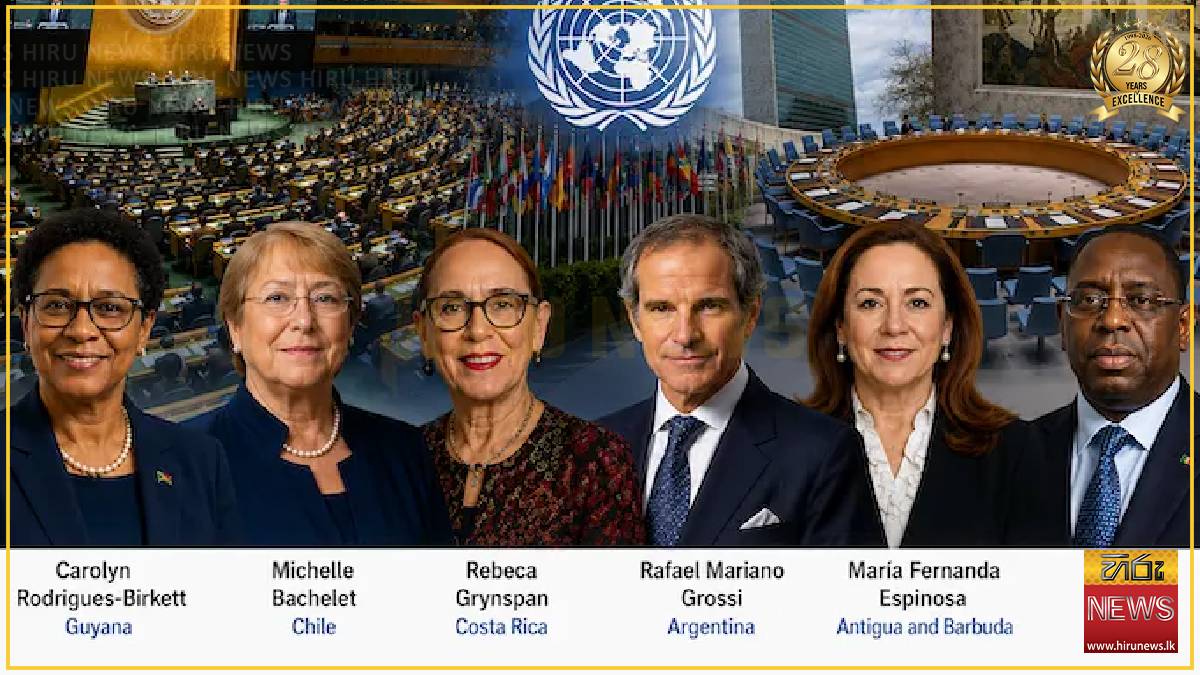
The succession is distinctive in several respects. It has produced one of the strongest and most diverse fields of candidates in the Organisation’s history, including several women whose experience places them among the most credible contenders ever to seek the office.
At the same time, the Caribbean Community (CARICOM) has demonstrated unusual regional unity by endorsing Guyanese diplomat Carolyn Rodrigues-Birkett, illustrating how smaller states are seeking a stronger voice in global governance.
More fundamentally, this is not simply a contest between distinguished individuals. It is a debate about the future direction of the United Nations itself.
António Guterres will leave office at the end of 2026 after serving the maximum two terms.
His successor will inherit challenges unlike any confronted by his predecessors.
Armed conflict, humanitarian emergencies, unsustainable debt, climate change, food insecurity, pandemics, digital transformation and artificial intelligence increasingly overlap, creating crises that cannot be understood—or resolved—in isolation.
These developments have exposed a central paradox of contemporary international politics. Never before have global challenges been so interconnected.
Never before have governments found collective action so difficult.
The United Nations inevitably reflects these tensions. Critics point to divisions within the Security Council, the slow pace of institutional reform and the Organisation’s inability to prevent or end many of today’s conflicts.
Such criticisms deserve serious attention. Yet they sometimes obscure a more fundamental reality.
Whenever governments seek to negotiate peace, coordinate humanitarian relief, confront climate change, advance sustainable development or establish international norms for emerging technologies, they continue to turn to the United Nations.
No other institution combines universal membership with comparable political legitimacy.
-Ramesh Jaura Blog
It will test whether the international community still believes dialogue, cooperation and shared responsibility can prevail in an era marked by war, geopolitical rivalry, climate disruption and growing distrust.
The candidates bring impressive credentials, but the larger question is what kind of leadership an increasingly fragmented world now requires.
A historic choice
The contest to choose the next United Nations Secretary-General comes at one of the most consequential moments in the Organisation’s eighty-year history.
Rarely has a succession unfolded against such a demanding global backdrop.
War has returned to Europe, conflict continues to devastate parts of the Middle East and Africa, strategic rivalry between the United States and China is reshaping international politics, climate change is accelerating, and rapid technological change is creating opportunities and risks that transcend national borders.
At the same time, confidence in international institutions has weakened, even as the need for international cooperation has become more urgent.
Rarely has the choice of Secretary-General mattered more.
The office itself has changed remarkably little since the United Nations was established in 1945.
The Secretary-General commands no armed forces, controls no independent budget and possesses no authority to compel governments to act.
Yet expectations of the office have expanded dramatically. In times of international crisis, governments, civil society and public opinion increasingly look to the Secretary-General not for executive power but for political judgement, moral credibility and the ability to keep channels of dialogue open when diplomacy begins to falter.
The 2026 selection process will determine who succeeds António Guterres when his second term ends on 31 December 2026.
The successful candidate will assume office on 1 January 2027 for a five-year term.
The succession is distinctive in several respects. It has produced one of the strongest and most diverse fields of candidates in the Organisation’s history, including several women whose experience places them among the most credible contenders ever to seek the office.
At the same time, the Caribbean Community (CARICOM) has demonstrated unusual regional unity by endorsing Guyanese diplomat Carolyn Rodrigues-Birkett, illustrating how smaller states are seeking a stronger voice in global governance.
More fundamentally, this is not simply a contest between distinguished individuals. It is a debate about the future direction of the United Nations itself.
António Guterres will leave office at the end of 2026 after serving the maximum two terms.
His successor will inherit challenges unlike any confronted by his predecessors.
Armed conflict, humanitarian emergencies, unsustainable debt, climate change, food insecurity, pandemics, digital transformation and artificial intelligence increasingly overlap, creating crises that cannot be understood—or resolved—in isolation.
These developments have exposed a central paradox of contemporary international politics. Never before have global challenges been so interconnected.
Never before have governments found collective action so difficult.
The United Nations inevitably reflects these tensions. Critics point to divisions within the Security Council, the slow pace of institutional reform and the Organisation’s inability to prevent or end many of today’s conflicts.
Such criticisms deserve serious attention. Yet they sometimes obscure a more fundamental reality.
Whenever governments seek to negotiate peace, coordinate humanitarian relief, confront climate change, advance sustainable development or establish international norms for emerging technologies, they continue to turn to the United Nations.
No other institution combines universal membership with comparable political legitimacy.
-Ramesh Jaura Blog