




Share Post


Coral reefs are experiencing bleaching events so frequently that they no longer have time to recover before the next one strikes, with global coral cover now well below normal levels and at risk of irreversible decline, scientists said on Monday.
The world's coral reefs sustain a quarter of all marine life, make coastlines more resilient and provide food and livelihoods for millions of people, but their survival has been threatened by pollution and increasingly frequent mass bleaching caused by soaring ocean heat.
The gap between bleaching events once stretched for decades, but now averages just five or six years, a group of scientists known as the Global Coral Reef Monitoring Network said in a report based on more than 40 years of data from nearly 37,000 reef sites in 120 countries and territories.
"If we give them enough time, they have the capacity to recover," lead author Manuel Gonzalez Rivero said. "But we haven't seen that amount of time being allowed. In fact, the frequency of those bleaching events has pretty much doubled."
Bleaching occurs when corals expel the colourful algae living in their tissues. Without the algae delivering nutrients to the corals, they become pale and vulnerable to starvation and disease.
While a bleached coral is not dead, ocean temperatures need to cool off if it is to have any hope of recovery.
The report's release comes as Pacific leaders gather in Palau on Monday for the annual Pacific Islands Forum.
The leaders are expected to coordinate climate priorities before the COP31 climate conference later this year.
Its findings provide further evidence of the impact that climate change is having on fragile coral reef ecosystems, with hard coral cover shrinking 9.5% below the historical average over the 2020-2024 period.
"We had 40 years of coral cover around the world that had remained relatively unchanged until 2010," Gonzalez Rivero said. "Since 2010 there has been a very steep change."
'STAIRCASE OF DECLINE'
Scientists recorded the world's first mass bleaching event in 1998 and three more have occurred since 2010.
When temperatures fall, the reefs can recover relatively quickly. Over 2017-2019, reefs gained 6% coral cover, nearly offsetting the 6.6% loss from the 2016 bleaching event.
The latest bleaching in 2023 was the most extensive on record, impacting 77% of the world's coral reef areas, part of what Gonzalez Rivero described as a "staircase of decline".
With El Niño weather patterns intensifying and ocean surface temperatures reaching a record high of 21.1 degrees Celsius (69.98°F) on August 22, another bleaching event could strike the world's reefs this year, he said.
"It is very likely given the temperatures."
Rapid cuts in emissions and the management of local threats — including unsustainable fishing and excessive coastal development — could limit further losses, the report said.
"We must act now to halt this decline and invest in solutions that reduce pressures and build resilience," said David Obura, chair of the Intergovernmental Science-Policy Platform on Biodiversity and Ecosystem Services.
"Delayed action risks locking in irreversible losses."
-Reuters
The world's coral reefs sustain a quarter of all marine life, make coastlines more resilient and provide food and livelihoods for millions of people, but their survival has been threatened by pollution and increasingly frequent mass bleaching caused by soaring ocean heat.
The gap between bleaching events once stretched for decades, but now averages just five or six years, a group of scientists known as the Global Coral Reef Monitoring Network said in a report based on more than 40 years of data from nearly 37,000 reef sites in 120 countries and territories.
"If we give them enough time, they have the capacity to recover," lead author Manuel Gonzalez Rivero said. "But we haven't seen that amount of time being allowed. In fact, the frequency of those bleaching events has pretty much doubled."
Bleaching occurs when corals expel the colourful algae living in their tissues. Without the algae delivering nutrients to the corals, they become pale and vulnerable to starvation and disease.
While a bleached coral is not dead, ocean temperatures need to cool off if it is to have any hope of recovery.
The report's release comes as Pacific leaders gather in Palau on Monday for the annual Pacific Islands Forum.
The leaders are expected to coordinate climate priorities before the COP31 climate conference later this year.
Its findings provide further evidence of the impact that climate change is having on fragile coral reef ecosystems, with hard coral cover shrinking 9.5% below the historical average over the 2020-2024 period.
"We had 40 years of coral cover around the world that had remained relatively unchanged until 2010," Gonzalez Rivero said. "Since 2010 there has been a very steep change."
'STAIRCASE OF DECLINE'
Scientists recorded the world's first mass bleaching event in 1998 and three more have occurred since 2010.
When temperatures fall, the reefs can recover relatively quickly. Over 2017-2019, reefs gained 6% coral cover, nearly offsetting the 6.6% loss from the 2016 bleaching event.
The latest bleaching in 2023 was the most extensive on record, impacting 77% of the world's coral reef areas, part of what Gonzalez Rivero described as a "staircase of decline".
With El Niño weather patterns intensifying and ocean surface temperatures reaching a record high of 21.1 degrees Celsius (69.98°F) on August 22, another bleaching event could strike the world's reefs this year, he said.
"It is very likely given the temperatures."
Rapid cuts in emissions and the management of local threats — including unsustainable fishing and excessive coastal development — could limit further losses, the report said.
"We must act now to halt this decline and invest in solutions that reduce pressures and build resilience," said David Obura, chair of the Intergovernmental Science-Policy Platform on Biodiversity and Ecosystem Services.
"Delayed action risks locking in irreversible losses."
-Reuters
Latest News
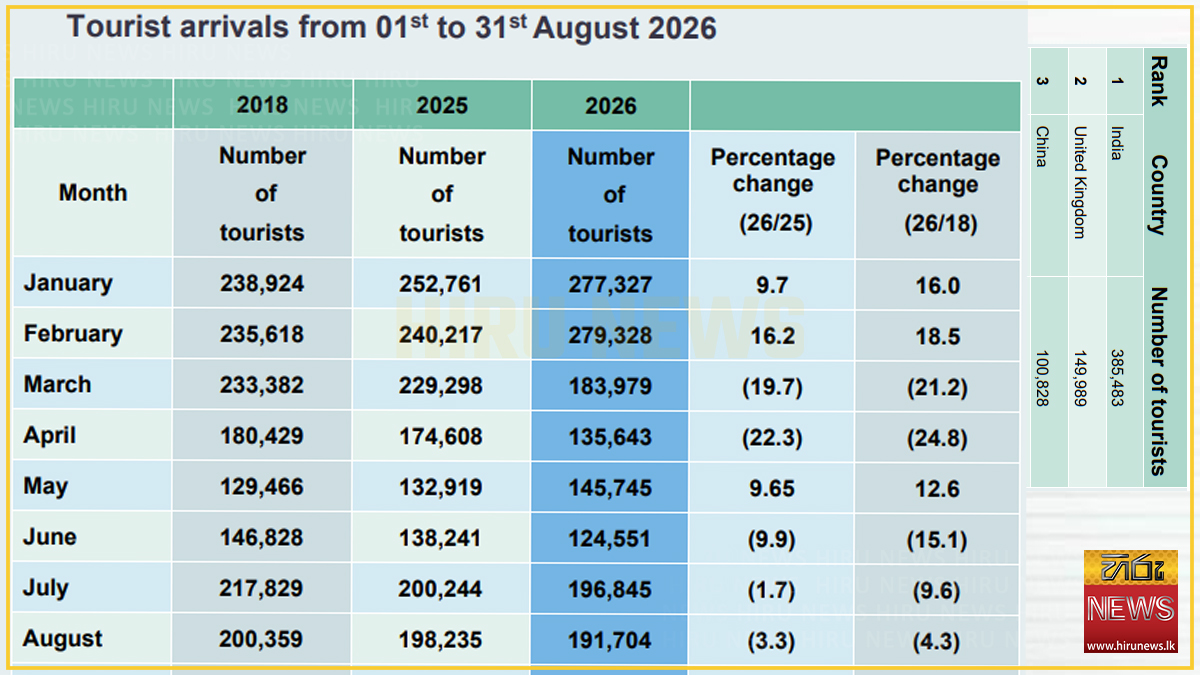
SL tourist arrivals decline for third consecutive month
Local
06 September 2026
President Anura Kumara Dissanayake assures national elections will be held as scheduled
Local
06 September 2026

Cardinal urges fishing community to assist in fight against drug trafficking
Local
06 September 2026

Lebanese health ministry reports four people killed in Israeli strikes
Local
06 September 2026
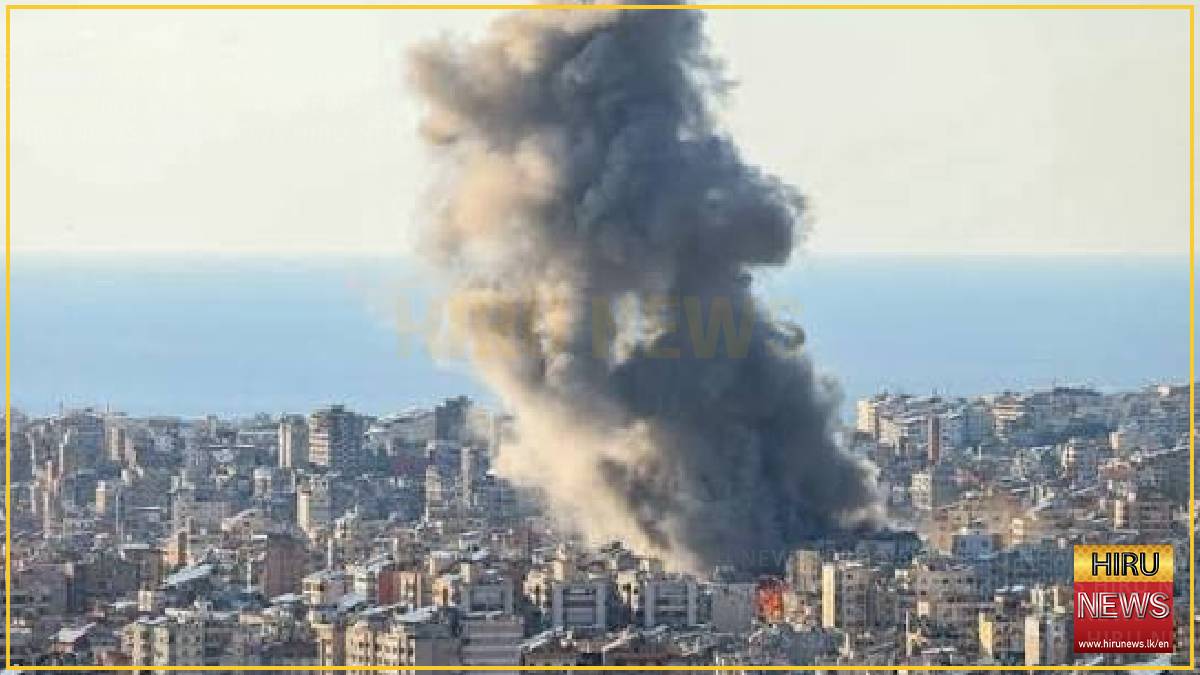
Lebanon president urges U.S. to help stop Israeli attacks
Local
06 September 2026

U.S. military dismisses Iran's claim of strike on U.S. ship in Strait: "A total lie"
Local
06 September 2026

Infantino will stand for re-election
Local
06 September 2026

Nepali woman found alive days after family began mourning rites
Local
06 September 2026

Dozens feared trapped in collapsed building in Delhi
Local
06 September 2026

Advocata warns RPC lease renegotiation could deter FDI
Local
06 September 2026