



Share Post


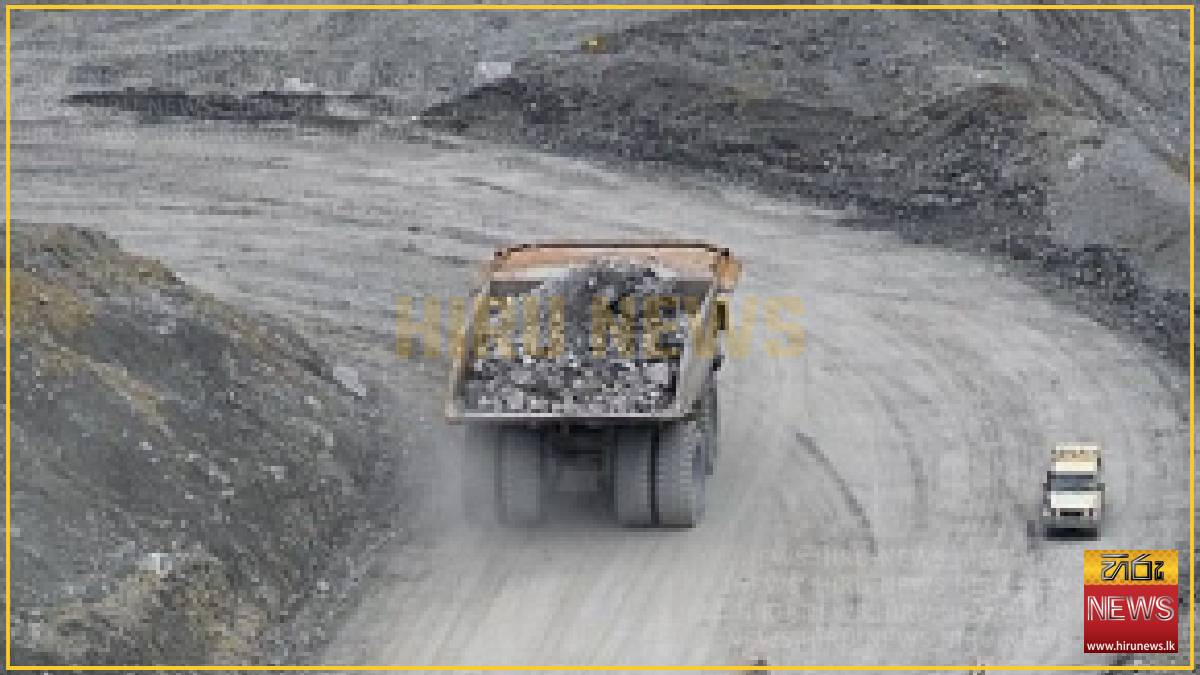
The export of mineral resources in their raw form without value addition faces an official ban under Sri Lanka’s updated National Mineral Policy, which takes effect after 27 years.
Minister of Industry and Entrepreneurship Development, Sunil Handunneththi announced the implementation of the revised strategy during a press briefing yesterday. Under the new framework, regulations will cover the entire mineral supply chain, spanning exploration, extraction, processing, and value addition to stop unprocessed raw materials leaving the country.
The national economy historically missed out on vital economic returns and foreign currency because the majority of mineral wealth left the country as raw commodities, Sunil Handunneththi stated.
The Minister of Industry and Entrepreneurship Development explained that the true financial potential of these assets was never fully realised, noting that whilst a tonne of a specific mineral might sell for about 2,000 US dollars, processing it would significantly multiply its market value. Materials like zircon, garnet, silica, quartz, and titanium were repeatedly exported without maximising profits.
Sunil Handunneththi added that old regulations restricted operations to exploration permits, but the new policy ensures Cabinet and Parliamentary approval to secure higher economic yields, coming into force on June 11, 2026.
Minister of Industry and Entrepreneurship Development, Sunil Handunneththi announced the implementation of the revised strategy during a press briefing yesterday. Under the new framework, regulations will cover the entire mineral supply chain, spanning exploration, extraction, processing, and value addition to stop unprocessed raw materials leaving the country.
The national economy historically missed out on vital economic returns and foreign currency because the majority of mineral wealth left the country as raw commodities, Sunil Handunneththi stated.
The Minister of Industry and Entrepreneurship Development explained that the true financial potential of these assets was never fully realised, noting that whilst a tonne of a specific mineral might sell for about 2,000 US dollars, processing it would significantly multiply its market value. Materials like zircon, garnet, silica, quartz, and titanium were repeatedly exported without maximising profits.
Sunil Handunneththi added that old regulations restricted operations to exploration permits, but the new policy ensures Cabinet and Parliamentary approval to secure higher economic yields, coming into force on June 11, 2026.
Latest News
Belgium rescue World Cup point Egypt denied historic win
Local
16 June 2026

Uruguay deny Saudi Arabia another World Cup opener
Local
16 June 2026

Cape Verde shock favourites Spain with goalless stalemate
Local
16 June 2026

Australia to probe assault claims by Gaza flotilla activists against Israeli forces
Local
16 June 2026

Trump says deal to end war with Iran already signed and details to be released 'pretty soon'
Local
16 June 2026
ASPI falls 191 points amid weak investor sentiment
Local
15 June 2026

Finance companies face bigger hit as gold-loan capital rules tighten - Fitch
Local
15 June 2026

India, Sri Lanka urged to boost rupee trade to cut costs, currency risks
Local
15 June 2026
Anthropic and US officials to meet to resolve dispute
Local
15 June 2026

Indian government to sell up to 5% GIC stake
Local
15 June 2026